


Tuesday. 6pm. You’re completely wiped out, the kids are somewhere between loud and feral, the fridge looks like a sad still life, and you’ve already mentally ordered pizza twice this week.
I’ve been there. Hundreds of times, honestly, over a decade of cooking for my family. And the thing nobody tells you about weeknight cooking? The problem isn’t that you can’t cook. It’s that most recipes assume a setup you simply don’t have—mise en place, multiple burners going, thirty focused minutes—and none of that exists on a Tuesday in a real house with real kids.
That’s why sheet pan dinners changed things for me. Not because they’re trendy (they’ve been around forever). Because they work with the chaos instead of against it.
You’re Not Lazy. The Method Is Wrong.
Most weeknight cooking advice treats efficiency like a character flaw. “Just prep on Sundays!” Cool suggestion. Except Sunday was a whole thing.
Sheet pan cooking flips the logic entirely. Everything lands on one pan, goes into the oven, and you walk away. No stirring, no watching, no four pots screaming for your attention while someone’s crying in the other room. The oven handles dinner while you help with homework—or just sit down for five minutes like a normal person.
And before anyone asks: no, things don’t get soggy. Not if you follow a few basic rules. We’ll get there.
The Nutrition Math Actually Works Out
Here’s something that gets quietly skipped in most sheet pan conversations. Because you’re roasting protein and vegetables together in one shot, you’re almost automatically building a balanced plate. No mental math required.
A 2022 report from the American Journal of Clinical Nutrition found that families eating home-cooked dinners at least four nights per week consumed roughly 30% less sodium and 200 fewer daily calories on average compared to families leaning heavily on takeout. Sheet pan meals land squarely in that “home cooked” category—and they’re often faster than your DoorDash window, which is a little embarrassing for DoorDash.
Consider a basic combination: chicken thighs, broccoli, sweet potato cubes, olive oil, garlic. That’s protein, two vegetables, a complex carb, and healthy fat. Done. No nutritionist needed.
The Cleanup Is Genuinely One Pan
I mean this literally. One pan.
Line it with foil or parchment, cook dinner, toss the liner. The pan itself barely needs washing—sometimes just a quick wipe. For a family of four, you’ve gone from a full sink of destruction to essentially nothing.
My neighbor Sarah started sheet pan cooking in late 2023 after her third kid arrived. She told me the cleanup alone bought her back forty-five minutes a week. That’s not a small thing. That’s a whole episode of something good.
Heat Is the Secret Weapon Most People Get Wrong
This part matters most and gets discussed least.
Low heat roasting produces completely different food than high heat. Sheet pan dinners need high heat—400°F to 425°F minimum. That’s what gets you caramelized edges on vegetables and actual browning on chicken instead of pale, steamed disappointment.
But cut size matters just as much. Your sweet potato cubes need to match your broccoli florets in size, or you’ll end up with burned broccoli and raw potato. That one adjustment—thirty extra seconds of attention—separates “this is incredible” from “this is fine, I guess.”
Also: don’t crowd the pan. Single layer, always. Crowding causes steaming, and steaming causes exactly the soggy situation people worry about. Use two pans if you need to. It’s fine.
Five Combinations That Reliably Work (Every Single Time)
You don’t need fifty recipes. You need five you can pull from memory.
First: Salmon, asparagus, lemon slices, olive oil, 400°F for 18 minutes. Fast, elegant, and kids actually eat it.
Second: Chicken thighs, cherry tomatoes, zucchini, Italian seasoning, 425°F for 30 minutes. Basically impossible to ruin.
Third: Sausage, bell peppers, onions, potatoes, 400°F for 35 minutes. Budget-friendly and genuinely filling.
Fourth: Shrimp, snap peas, bok choy, sesame oil, soy sauce drizzle, 425°F for 12 minutes. Done before your rice finishes cooking.
Fifth: Chickpeas, cauliflower, red onion, cumin, smoked paprika, 425°F for 25 minutes. Vegetarian, surprisingly satisfying, and the chickpeas develop this incredible crispy shell.
Memorize those five. Rotate them. You’ve got a month of dinners handled without thinking hard about any of it.
Budget-Friendly Isn’t an Accident
Sheet pan cooking is cheap. Not because you’re cutting corners—because the method suits affordable ingredients perfectly. Chicken thighs ran about $2.50 per pound at most grocery stores in 2024. Seasonal vegetables are always less expensive than out-of-season ones, and roasting happens to be one of the best possible treatments for budget-friendly produce like squash, cabbage, and root vegetables.
My family of four eats sheet pan dinners for under $20 most nights. Usually under $15. Compare that to a fast food run that costs $40 and leaves everyone vaguely unsatisfied. The math isn’t close.
The Kid Factor Is Real But Solvable
Kids are picky. Obviously. But roasting changes vegetables in ways that boiling and steaming just don’t. Caramelization adds natural sweetness. The texture shifts—crispy edges, softer interior—and a lot of kids who flatly refuse steamed broccoli will eat roasted broccoli without a single complaint.
My own kids (7 and 10 as of this writing) reject maybe 60% of what I put in front of them. But the hit rate on sheet pan dinners is noticeably higher. Something about the browning. The smell when the oven opens. The fact that it actually looks like food and not hospital food.
So let them pick one ingredient. Give them a small slice of control over the plate. It won’t fix everything, but it helps more than you’d expect.
Bottom Line
Here’s what I haven’t seen anyone else say plainly: sheet pan dinners aren’t just a cooking method—they’re a psychological hack. People don’t abandon weeknight cooking because they lack nutrition knowledge or even time. They quit because of decision fatigue stacked on top of cleanup dread. When you know dinner means one pan, one decision, and a liner you just throw away, the mental resistance drops low enough that you actually follow through. Consistently.
And consistency is the only thing that genuinely moves the needle for your family’s health. Not the perfect recipe. Not the ideal macros. Consistency.
Frequently Asked Questions
Can I meal prep sheet pan dinners in advance?
Yes—but be strategic about it. Chop your vegetables and marinate your protein the night before, store them separately in the fridge, and just dump everything on the pan when you get home. Full pre-cooking and reheating works too, but freshly roasted texture is noticeably better.
What temperature is best for sheet pan dinners?
Between 400°F and 425°F for most proteins and vegetables. Shrimp and fish do well at 400°F. Chicken thighs and root vegetables want 425°F. Drop below 375°F and you’re steaming rather than roasting—which is a different (and lesser) outcome.
Do I actually need a special sheet pan?
No. A standard half-sheet pan (18×13 inches) works perfectly fine. Rimmed edges matter—rimless pans let juices drip and smoke. Nordic Ware makes a solid option for about $15 that’s been sitting on my counter since 2019.
How do I stop vegetables from getting soggy?
Three things: high heat, single layer, and dry your vegetables before oiling them. Wet vegetables steam instead of roast. Pat them with a paper towel first. That’s genuinely the whole fix.
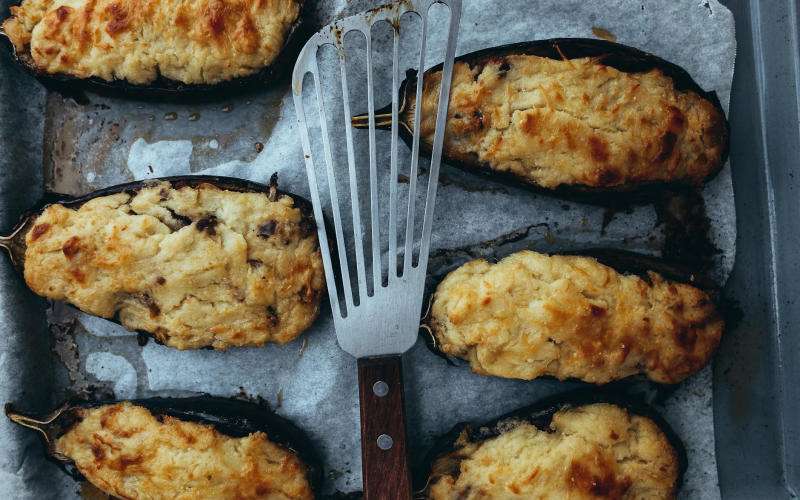
Photo by Rachel Claire on Pexels