
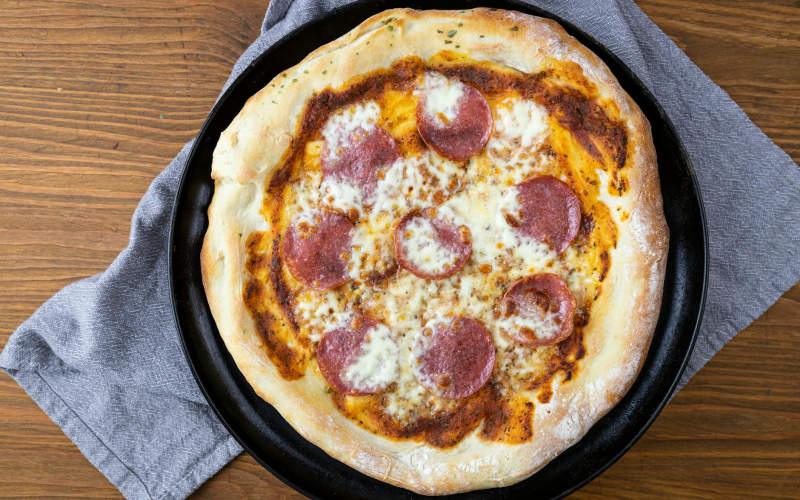


I’ve burned through probably 200 batches of pizza dough over the past decade. Some were decent. Most were disappointingly bready, soft in the wrong way, or just… flat. Not flat as in thin—flat as in flavor and texture that had no life to it. Every single time, I’d stand there wondering: why does the pizzeria down the street—a place slinging pies since 1987—produce something that tastes like a completely different food?
Here’s the honest answer: it’s never just one thing. It’s four or five small gaps stacking on top of each other until your crust ends up more dinner roll than Neapolitan masterpiece.
Let me break down exactly what’s going wrong.
Your Flour Is Probably Wrong for the Job
Most home cooks grab all-purpose because it’s sitting right there on the shelf. Makes sense. But pizzerias—especially serious ones—use high-gluten flour, typically with a protein content around 13-14%. Think King Arthur’s Sir Lancelot or Caputo 00. All-purpose sits around 10-11% protein. That 3% gap is enormous when we’re talking gluten development, which is literally the thing responsible for chew.
Gluten strands give dough elasticity. That satisfying pull when you bite through a crust? That’s them. Less protein means less gluten. Less gluten means less chew. Simple math.
Your Dough Isn’t Cold Fermenting Long Enough
This one kills me, because it’s so easy to fix and almost nobody does it. Most recipes say “let rise 1 hour at room temperature.” Fine for bread. For pizza? That’s barely a starting point.
The best pizzerias cold-ferment their dough 48 to 72 hours in a refrigerator. Paulie Gee’s in Brooklyn—arguably one of the best pizza spots in the country—famously relies on a long cold fermentation process. During that slow cold rise, enzymes break down the flour into more complex compounds, building flavor AND strengthening the gluten network. Your one-hour room-temp rise produces a puffier, structurally weaker dough that bakes up soft instead of chewy.
Make your dough on Thursday. Use it Saturday. You’ll taste the difference immediately.
You’re Not Getting the Oven Hot Enough
Commercial pizza ovens run between 700°F and 900°F. Your home oven maxes out around 500-550°F—and honestly, most people bake pizza at 425°F because some recipe told them to.
That temperature gap matters more than almost anything else. High heat creates oven spring, a rapid puff of steam inside the dough that sets the crust structure fast, producing those beautiful air pockets and a chewy, slightly crisp exterior. At lower temperatures, the dough just slowly dries out instead of dramatically puffing and setting. A pizza steel (not a stone—steel conducts heat faster) preheated for a full hour at your oven’s maximum temperature gets you significantly closer to that effect.
You’re Overloading the Dough With Toppings
Heavy toppings weigh down the crust before it has any chance to set. The dough underneath can’t puff, can’t build those internal air pockets. So it stays dense. And dense means bready, not chewy.
Keep it sparse. Seriously—four or five thin slices of fresh mozzarella, a few spoonfuls of sauce. That’s it.
Your Hydration Is Too Low
Pizzeria doughs typically run 60-70% hydration (water weight vs. flour weight). Most beginner recipes use 55% or lower, because sticky dough is harder to handle. But that extra water creates steam pockets during baking, which directly contributes to chew and an open crumb structure.
Higher hydration is wetter and trickier to work with. But it’s worth learning.
Bottom Line
Here’s something I haven’t seen written anywhere else: the chew gap in homemade pizza isn’t really a recipe problem. It’s a patience problem wearing a recipe costume. The flour, the oven, the hydration all matter. But the single biggest mistake most home cooks make is treating pizza dough like something that should be finished today. Every shortcut you take compresses the timeline, and compressed time is compressed texture. Slow down deliberately, and your crust will taste like someone actually cared.
Frequently Asked Questions
Why is my homemade pizza crust not chewy like pizzeria pizza even when I follow a recipe?
Recipes often shortcut fermentation time and call for all-purpose flour. Both choices produce a weaker gluten network. Try switching to bread flour and cold-fermenting your dough for 48+ hours—those two changes alone will dramatically close the chew gap.
Does the type of yeast affect chew?
Not directly. But instant yeast tends to make people skip cold fermentation because it works so fast. Use less of it (¼ teaspoon per 500g flour) and let it work slowly in the fridge. The slow process is the whole point.
What’s the easiest single upgrade I can make right now?
Buy a pizza steel and preheat it at your oven’s maximum temperature for at least 45-60 minutes before baking. It won’t fix everything, but it’s the fastest single improvement you can make without overhauling your entire process.
Can I get chewy crust without a pizza steel?
You can get closer. A cast iron skillet preheated in the oven gets genuinely hot and works reasonably well. But a steel—something like the Baking Steel Original, which has been around since 2012—is a meaningful upgrade worth the $80-100 investment if you’re making pizza more than twice a month.
Photo by Mateusz Feliksik on Pexels