
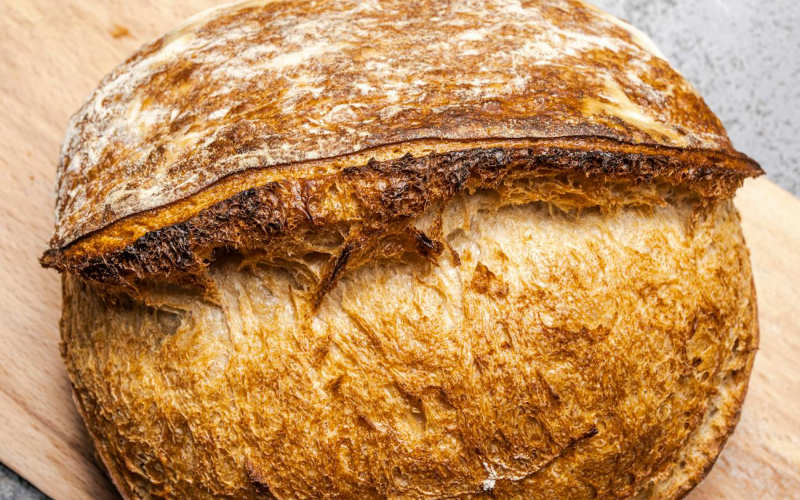


I killed my first sourdough starter three times. Three. The fourth one finally pulled through, and that sad little jar of bubbling flour paste eventually produced the best bread I’ve ever eaten in my life. This was back in 2019, well before sourdough became the pandemic hobby everyone’s grandmother suddenly claimed she’d been doing for decades.
Here’s what I wish someone had just told me upfront: you don’t need a $400 Dutch oven, a proofing basket, a bread lame, or any of the gorgeous equipment cluttering those Pinterest photos. Flour. Water. Salt. Time. And a genuine willingness to fail a couple of times without rage-quitting.
That’s it. So let’s get into it.
Building Your Starter (The Part Everyone Overthinks)
Your starter is just wild yeast you capture and cultivate. Mix equal weights of flour and water—50 grams each works fine—in a clean jar. Day 1, done. Leave it somewhere warmish, around 70-75°F if you can swing it.
Every 24 hours, discard half and feed it fresh flour and water in that same ratio. Don’t agonize over the discard being “wasteful.” You’re building a colony of microorganisms here, not running a restaurant kitchen.
By Day 4 or 5, bubbles appear. By Day 7, it should be doubling in size within 4-8 hours of a feeding. That’s your green light to bake. If yours takes 10 days? Completely normal. Temperature, flour type, even your tap water chemistry can stretch the timeline.
And here’s something most guides just skip right over: whole wheat or rye flour speeds things up dramatically because those grains carry more wild yeast. I still throw a tablespoon of rye into my starter feedings years later. Still works.
Equipment You Actually Need (Spoiler: It’s Almost Nothing)
Forget the $280 Challenger Bread Pan. Seriously, just forget it.
What you actually need: a large mixing bowl, a kitchen scale (cheap ones on Amazon run $10-12 and work perfectly fine), a regular loaf pan or any oven-safe pot with a lid, and a sharp knife or a single razor blade for scoring. That’s the whole list.
A Dutch oven is helpful—I use a $35 Lodge cast iron one I bought in 2020, still going strong—but honestly, a covered casserole dish works too. The lid is what matters. Trapped steam during the first 20 minutes of baking is what creates that glossy, crackling crust everyone loses their mind over.
No banneton? Line a bowl with a well-floured kitchen towel. Functionally, it’s the same thing.
The Basic Dough Formula (Memorize This)
Write this somewhere you won’t lose it. 450g bread flour, 325g water (72% hydration—very manageable for beginners), 9g salt, and about 90g of active starter.
Lower hydration is your friend right now. You’ll see recipes boasting 80%, even 85% hydration doughs, and yeah, they’re beautiful—but they’re also sticky, shapeable disasters when you’re just starting out. Stay at 72%. Get comfortable. Bump it later if you want more open crumb.
Mix flour and water first, then let that rest for 30 minutes before adding anything else. This rest is called autolyse, and it lets the flour fully hydrate while starting gluten development before you’ve even touched the dough. Makes it easier to handle. Makes your crumb more open. Worth doing every single time.
Stretch and Fold Instead of Kneading
Traditional kneading doesn’t really translate to sourdough. The dough’s wetter, the fermentation runs longer, and aggressive kneading can actually wreck the structure you’re working to build.
So instead, you stretch and fold. Every 30 minutes for the first 2 hours, grab one side of the dough, stretch it up as high as it’ll go, and fold it over the center. Rotate the bowl 90 degrees. Do that four times around. That’s one set—you need four sets total.
Each set takes maybe 30 seconds. You can do this while watching something mindless on TV. After all four sets, just leave the dough alone at room temperature to bulk ferment, usually 4 to 6 hours depending on how warm your kitchen runs.
How do you know when bulk fermentation is done? The dough should look puffy and jiggly, bubbles visible on the surface and along the sides, and it should’ve grown roughly 50-75% in volume.
Shaping, Scoring, and That Cold Overnight Proof
Shaping intimidates people. But it doesn’t need to be pretty—it needs to be tight.
Turn the dough out onto an unfloured surface (a little stickiness creates friction, which actually helps you build tension). Gently stretch it into a rough rectangle, fold the sides in like an envelope, then roll it toward you until you feel that surface tension build up. Drop it seam-side up into your floured bowl or banneton. Cover it with plastic wrap, or honestly, a clean shower cap works great.
Into the fridge it goes, overnight, anywhere from 8 to 16 hours. This cold proof—called retarding—slows fermentation way down, builds more complex flavor, and firms the dough up so it’s actually easier to score before baking.
Score right before it goes in the oven. One confident slash at a 45-degree angle is enough. This isn’t art class. The score tells the bread where to expand, so be quick and decisive about it.
Baking It Without Fancy Equipment
Preheat your oven to 500°F (260°C) with your pot or Dutch oven sitting inside for at least 45 minutes. It needs to be scorching hot. This matters more than people realize.
Pull your cold dough straight from the fridge. Drop it into the hot pot, score it, lid goes on, bake covered for 20 minutes. Then pull the lid and bake another 20-25 minutes until it’s a deep golden brown—darker than your instincts are telling you.
The steam from that covered phase creates oven spring and crust. The uncovered phase caramelizes and crisps everything. And then—this part kills people—let it cool on a wire rack for at least an hour before you cut into it. Cutting too soon makes the crumb gummy. One hour. Non-negotiable.
Bottom Line
Here’s something I’ve genuinely never seen written anywhere: the biggest gap between good home sourdough bakers and great ones isn’t technique. It’s note-taking. After every single bake, write down your kitchen temperature, how long bulk fermentation ran, how active your starter looked, what flour you used. Most beginners treat each loaf like a fresh start. But bread is cumulative knowledge. Your 10th loaf will only be remarkable if you actually understand why your 5th one failed. Buy a cheap spiral notebook. Keep it in the kitchen. That notebook will teach you more than any recipe ever will.
Frequently Asked Questions
How long does it take to bake sourdough bread from scratch as a beginner?
Start to finish, plan on 24-36 hours—but the vast majority of that is hands-off fermentation and cold proofing. Your actual active time is probably 45 minutes total. Don’t let the timeline scare you off.
Can I use all-purpose flour instead of bread flour?
Yes, and the bread will still taste genuinely good. Bread flour has higher protein content (around 12-13% versus 10-11% in all-purpose), which means more gluten structure and a chewier crumb. But plenty of excellent sourdough loaves come out of all-purpose flour, especially when you’re just getting started.
Why isn’t my sourdough starter rising?
Temperature is the usual culprit. Starters below 65°F get sluggish and strange. Try sitting yours on top of the refrigerator, inside your oven with just the light on, or near a heating vent. If it smells like nail polish remover (acetone), it’s starving—feed it more often.
Do I have to discard starter every time I feed it?
If you’re baking every day, eventually no. But during the building phase, yes—discarding keeps the jar from getting out of control and maintains the pH balance that lets the good bacteria dominate. Save those discards in the fridge. Pancakes, crackers, pizza dough. Nothing has to go to waste.
Photo by Kerim Eveyik on Pexels