
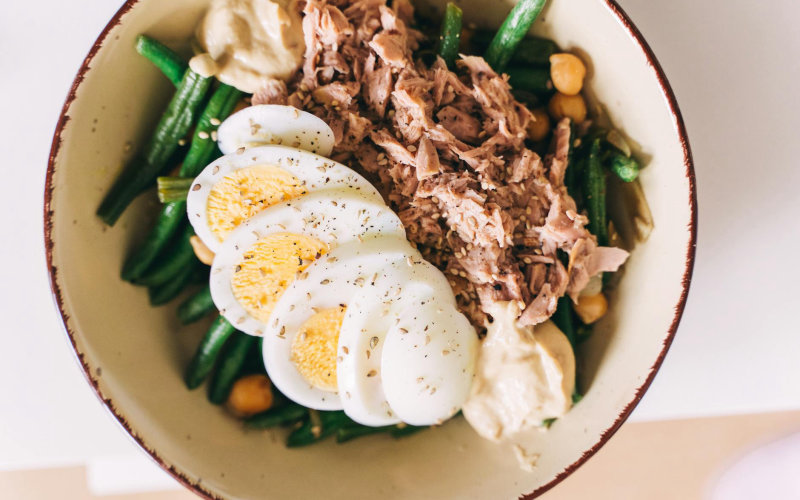


I’ve been meal prepping breakfasts since 2013. And I’ll tell you straight up — the first two years were genuinely rough. Rubbery eggs on Wednesday morning. Greek yogurt parfaits dissolved into soggy mush by Tuesday. Protein pancakes that could patch a roof. The learning curve is no joke.
But here’s what I eventually worked out: meal prepping itself isn’t the problem. Picking the wrong recipes is. Not every high-protein breakfast survives five days in the fridge with any dignity. Some do, though — beautifully, actually. And those are the nine I’m walking you through today.
Every single one of these clears 20 grams of protein per serving, holds in the fridge for 4-5 days without going depressing, and — this part genuinely matters — tastes distinct enough that you won’t be fantasizing about hurling your Tupperware out a window by Thursday.
1. Egg Muffins (The Workhorse You Never Get Tired Of)
Twelve muffin cups. One Sunday afternoon. Breakfast covered for the week.
The move most people skip? Adding full-fat cottage cheese to the egg mixture — roughly ¼ cup per 6 eggs. It keeps them moist straight through day five and bumps protein from about 12 grams per two muffins up to nearly 18. I’ll sometimes use mini muffin tins and grab four or five on my way out. You feel like you’re eating more volume than you actually are, which is its own weird win.
Rotate your fillings week to week. Spinach, sun-dried tomatoes, and feta one Sunday. Chorizo, roasted pepper, and cheddar the next. Your brain picks up on the variety even though your prep routine is basically identical.
2. Overnight Oats with Protein Powder
Yeah, I know. You’ve heard this one a hundred times. Stick with me for a second.
Most overnight oats recipes that try to incorporate protein powder end up chalky and odd because people dump the powder in dry. What actually works: dissolve your protein powder (I use around 20g of unflavored or vanilla casein) into the milk first — fully dissolved — then fold in your oats. Casein works noticeably better here than whey because its thicker consistency blends into the natural creaminess of the oats rather than sitting weirdly on top.
You can batch five mason jars in about 12 minutes flat. Each jar lands somewhere around 30-35 grams of protein when you’re using full-fat Greek yogurt as your base alongside the milk. Save toppings — fresh berries, a spoon of almond butter, whatever you like — for the morning so nothing turns to mush overnight.
3. Turkey Sausage and Sweet Potato Hash (Frozen in Portions)
This one surprised me. I assumed it wouldn’t survive reheating. I was wrong.
Brown your turkey sausage with diced sweet potato, onion, and a fistful of kale in one big skillet on Sunday. Season it hard — smoked paprika, garlic powder, a pinch of cayenne. Split it into five containers. Come morning, 90 seconds in the microwave, a fried egg from your pan (seriously, three minutes), and you’re sitting somewhere between 32 and 38 grams of protein depending on how many eggs you throw on top.
Sweet potato holds up through reheating in a way regular potato just doesn’t. Don’t swap it out.
4. Greek Yogurt Bark
This one’s actually fun. And there’s zero cooking involved.
Spread full-fat Greek yogurt — Fage 5% is your best bet here, it runs about 18g of protein per cup, higher than most brands — across a parchment-lined baking sheet. Drizzle honey over it, scatter mixed berries and crushed pistachios on top, and freeze for at least 3 hours. Break it into pieces. Toss them in a freezer bag.
Eat it straight from the freezer like a cold snack, or let it sit for 5 minutes if you want something that genuinely feels like a treat rather than a nutrition obligation. A quarter of the bark sheet gets you around 20 grams of protein.
5. Cottage Cheese Pancakes
Four ingredients. I mean it.
One cup cottage cheese, two eggs, half a cup oats, a teaspoon of vanilla. Blend until smooth. Cook like regular pancakes. Stack them in your fridge with parchment between each one so they don’t bond into a single sad disc.
These reheat in a toaster or dry skillet in about 2 minutes and come out with crispy edges — which is the opposite of the rubbery fate that kills most reheated pancakes. Three medium pancakes lands you right around 22 grams of protein. Add a spoonful of almond butter and a banana and you’re comfortably over 30.
6. Smoked Salmon and Cream Cheese Roll-Ups
No cooking. No reheating. Ready in 90 seconds flat.
Lay out a low-carb tortilla, spread two tablespoons of cream cheese across it, layer on smoked salmon (about 3 ounces gets you 16-17g of protein), add capers, thinly sliced cucumber, a squeeze of lemon. Roll it up. Wrap in foil. You’re out the door.
These only keep for 3 days — not 5. So make them for Monday through Wednesday and use other recipes to carry Thursday and Friday.
7. Hard-Boiled Eggs with Tahini Dipping Sauce
Sounds dull. Weirdly hard to stop eating.
Batch cook a dozen eggs on Sunday — 12 minutes at a rolling boil, straight into an ice bath, perfect yolks every single time. Then mix a small jar of tahini sauce: 3 tablespoons tahini, lemon juice, garlic, enough water to thin it out. Six grams of protein per egg means two or three eggs with the sauce puts you at 18-22 grams without any real effort.
Here’s the thing: people eat these and ask what I did to the eggs. The answer is nothing. It’s entirely the sauce doing the work.
8. Baked Protein Oatmeal (One Pan, Five Servings)
Think of oatmeal that you slice like a brownie. Because that’s exactly what this is.
Mix 2 cups oats, 2 scoops vanilla protein powder, 2 eggs, 1.5 cups milk, 1 mashed banana, a tablespoon of chia seeds, plus your spices — cinnamon, nutmeg, a little salt. Pour it into a greased 8×8 baking dish. Bake at 375°F for 28-30 minutes. Cut into five squares.
Each square delivers around 25 grams of protein. Eat it cold, at room temperature, or 45 seconds in the microwave. It’s dense in the best possible way — the kind of dense that keeps you from desperately eyeing the snack drawer at 10 AM.
9. Tofu Scramble with Black Beans
This one’s for anyone avoiding eggs, or anyone who hits full-blown egg fatigue around week three of heavy meal prep — which, trust me, happens.
Crumbled firm tofu, a can of black beans, nutritional yeast, turmeric, garlic, and whatever vegetables are lingering in your fridge. Ten minutes on the stove. Divide into portions. A cup of tofu scramble with half a cup of black beans lands you at roughly 26-28 grams of plant-based protein.
And it tastes completely unlike eggs. That’s the whole point.
Bottom Line
Here’s something that rarely gets said about high protein meal prep breakfast ideas: the real failure point usually isn’t the recipes themselves — it’s how protein gets spread (or doesn’t) across your entire day. Most people pile it all into lunch and dinner without noticing, then genuinely can’t figure out why they’re gnawing their desk by 11 AM. A breakfast sitting at 25-35 grams of protein doesn’t just fuel your morning — it trims down the total number of food decisions you’re making before noon, which is precisely when decision fatigue starts quietly wrecking your eating habits. Pick two or three recipes from this list each week, rotate them, and your whole dietary rhythm tends to stabilize without you consciously managing it.
Frequently Asked Questions
How long do these high protein meal prep breakfasts actually last in the fridge?
Most hold up for 4-5 days without issue. The smoked salmon roll-ups are your exception — 3 days maximum on those. Egg muffins can sometimes push to day six if your fridge runs consistently cold (below 38°F).
Can I freeze any of these?
Absolutely. Egg muffins freeze beautifully for up to 3 months. The baked protein oatmeal squares do too. Greek yogurt bark is designed to live in the freezer. Overnight oats and tofu scramble don’t freeze well — just don’t bother trying.
What if I don’t need five full servings of one recipe?
Mix and match. Make two batches of egg muffins with different fillings — cheese and veggie versus meat — and alternate through the week. Three days of one, two of the other. Your prep time stays totally manageable and your mornings stop feeling like a Groundhog Day situation.
Is 20-30 grams of protein at breakfast actually necessary?
For most people trying to manage hunger, hold onto muscle, or lose weight — yes, the research backs it up pretty consistently. A 2020 University of Missouri study found that participants eating 35 grams of protein at breakfast cut their late-day snacking by roughly 25% compared to people eating standard lower-protein morning meals. So the numbers here matter more than most people think.
Photo by Alesia Kozik on Pexels