
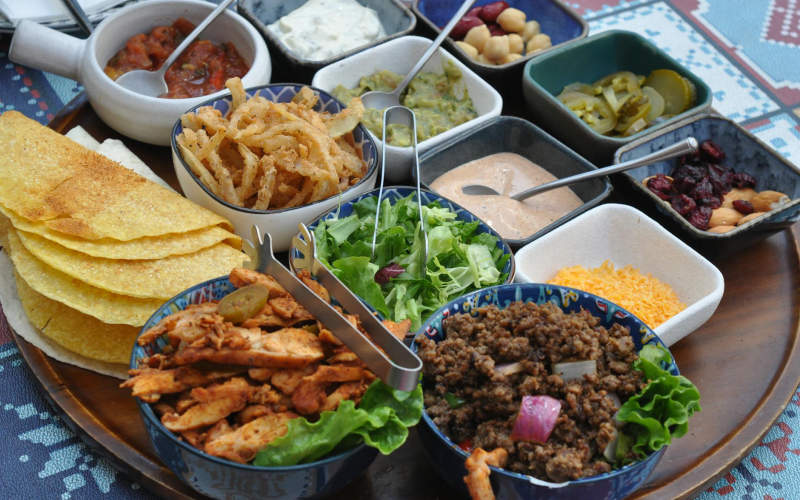


Last summer I threw together a taco bar for my sister’s birthday — fourteen people, maybe forty-five minutes of actual prep, and I spent $27.83 at Aldi. People scraped the pans clean. Two friends texted me the next day asking for “the recipe,” which honestly cracked me up because there wasn’t really a recipe. There was just a plan.
That’s the whole secret to a great taco bar. Not fancy ingredients. Not some elaborate cooking timeline. Just knowing which simple things combine into something that feels way bigger than the sum of its parts — and buying smart enough that you’ve still got cash left over after feeding a crowd.
Here’s exactly how I do it, broken down so you can pull this off even on a Thursday night with zero culinary training.
Start With the Math (This Part Matters)
Before you grab a cart, do a headcount. Ten people is the sweet spot for the $30 budget, and it’s totally doable. Figure roughly 3 tacos per person — 30 tacos total. That means enough protein for about 2.5 pounds, enough toppings to fill a table, and enough tortillas that nobody’s standing there empty-handed halfway through.
The biggest budget mistake I see? Overbuying protein and skimping on toppings. Toppings are what make the bar feel abundant. A table with eight little bowls of colorful stuff looks like a feast even before you’ve touched the meat. Keep that in mind.
Ground Beef Is Your Best Friend Here
Two pounds of ground beef (80/20) runs about $7–$9 depending on your store and region. That’s your foundation. Season it yourself — skip those little spice packets at $1.50 each when a homemade blend costs pennies and genuinely tastes better.
My go-to: one tablespoon chili powder, one teaspoon cumin, half a teaspoon garlic powder, half a teaspoon onion powder, a pinch of cayenne, salt and pepper. Mix it dry, toss it in after you’ve browned the meat, add a quarter cup of water, and let it simmer about four minutes. Done. Better than anything in a packet, I promise.
If beef runs expensive that week, ground turkey works beautifully with the exact same spice blend. I’ve served it to people who swore it was beef. Nobody complained once.
Corn Tortillas Over Flour. Every Time.
A 30-count package of corn tortillas costs around $1.50–$2.00 at most grocery stores. Flour tortillas cost more, go stale faster, and — honestly — they’re better suited for burritos anyway. Corn tortillas charred directly on a gas burner for about 20 seconds per side? Completely different animal.
No gas stove? Heat a dry skillet on medium-high and do the same thing. Stack them in a clean kitchen towel to keep them warm and pliable. This one step alone will make people think you know something they don’t.
And sure, offer both if you want. But buy corn as your base.
The Toppings That Actually Matter
This is where the bar becomes a bar. You want color, texture, temperature contrast, and acid. Here’s what I buy and roughly what each costs:
One bag shredded Mexican cheese blend — $2.50. One container of sour cream — $1.79. One bunch of cilantro — $0.79. One white onion — $0.80. One lime (or a small bag) — $1.00. One can of black beans, drained and warmed with cumin — $0.89. One 16-oz jar of salsa — $2.00. One head of romaine or a bag of shredded cabbage — $1.50.
So that’s roughly $11–$12 for an entire toppings spread. Dice the onion fine. Chop the cilantro rough. Cut the lime into wedges. Warm the beans. Put everything into small bowls and suddenly your kitchen counter looks like a restaurant setup.
The cabbage thing is underrated, by the way. Shredded cabbage adds crunch in a way lettuce simply can’t, and it holds up under warm meat without going limp on you immediately.
Don’t Skip the Pickled Jalapeños
A small jar of pickled jalapeños costs $1.50 and it gives people options. Heat seekers love them. Non-heat-seekers skip them entirely. But having that little jar sitting there — it signals you thought about everyone, which people unconsciously appreciate at a party.
And if you’ve got about $2 to spare and want to feel extra fancy, grab an avocado or two. Mash them with lime juice and salt. Instant rough guacamole, way better than jarred, takes three minutes flat.
How to Set Up the Physical Bar
Line everything up in a logical flow: tortillas first, then meat, then warm toppings (beans), then cold toppings (cheese, sour cream, cabbage), then wet stuff (salsa, guac), then garnishes (cilantro, onion, jalapeños, lime). This matters more than it sounds.
When the order makes sense, the line moves fast. When people are reaching across each other for the cilantro, things get chaotic and the meat gets cold. Use whatever bowls, plates, and ramekins you own — mismatched is fine, actually kind of charming.
Label things if guests have dietary stuff going on. A little folded card that says “beans — vegan” takes ten seconds and it’s genuinely considerate.
Stretch It Further With Rice on the Side
A big pot of Mexican rice costs almost nothing — one cup of dry rice (maybe $0.40 worth), canned tomatoes ($0.89), chicken broth or bouillon, garlic, cumin. Toast the rice dry in oil, add everything else, cook covered for 18 minutes. It gives people something to fill their plates with, which stretches your taco ingredients without you even noticing.
A bag of tortilla chips and a second jar of salsa adds another $3–$4 and gives people something to snack on while the meat finishes. Smart crowd management, honestly. Hungry people standing around get impatient; hungry people with chips get patient.
Bottom Line
Here’s something I’ve never actually seen written anywhere about taco bars: the reason they work for crowds isn’t really the food itself — it’s the format. People build their own plates. They customize. They feel in control of their meal in a way that a casserole or plated dinner never allows. That autonomy makes the food taste better to them because they chose it. So even if your guacamole’s a little lumpy and your rice stuck slightly, guests forgive it — because they built it themselves. The bar format is doing emotional labor for you. Lean into that.
Frequently Asked Questions
How far in advance can I prep a taco bar?
Most of it can be done the morning of. Cook and refrigerate the meat, chop your toppings, store everything covered. Reheat the meat with a splash of water in a skillet over medium heat — it comes back perfectly. Don’t warm the tortillas until about 15 minutes before people eat.
Can I make this vegetarian without losing flavor?
Absolutely. Swap the ground beef for two cans of black beans plus one can of pinto beans, seasoned the exact same way. Add one can of corn for texture. Total cost drops by about $6, and honestly, most meat-eaters won’t feel like they’re missing anything.
What’s the best way to keep meat warm during a party?
A slow cooker on the “warm” setting is the easiest answer. Cooked seasoned meat holds well in a crockpot for 2–3 hours without drying out, especially if you add a few tablespoons of water or broth before switching it over.
Is $30 really enough for more than 10 people?
Push to 12–14 people and you might need to bump your budget to $38–$42, mostly for extra protein and tortillas. But the toppings scale pretty well without much additional cost — you just need more of the cheap stuff.
Photo by Ан sol on Pexels