
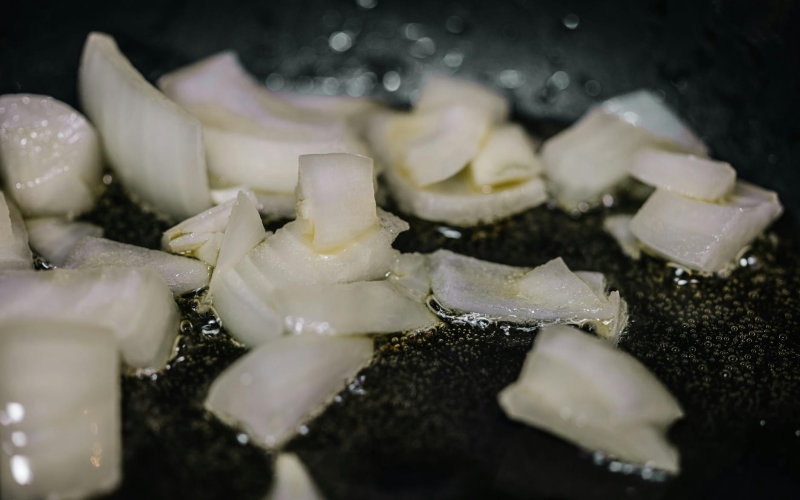


I ruined so many batches of onions before I figured this out.
Seriously. I’d crank the heat, watch a few spots turn golden, get excited — then suddenly half the pan was scorched and my kitchen smelled like regret. It took years (and an embarrassing number of ruined French onion soups) to understand that caramelized onions aren’t really about heat at all. They’re about patience. And a handful of specific techniques that nobody actually bothers explaining properly.
The good news? Once you know the real method, you’ll hit perfect, jammy, deeply sweet onions almost every time. No burning. No weird bitter aftertaste. Just that sticky, amber-colored magic that makes burgers, pastas, flatbreads, and egg dishes taste like something from an actual restaurant.
The One Mistake Almost Everyone Makes First
Too much heat. That’s it. That’s the whole mistake.
Most people treat caramelizing like sautéing — hot pan, quick cook, done in eight minutes. But actual caramelization takes 45 minutes minimum at medium-low heat, sometimes closer to an hour. Julia Child knew this. Serious Eats ran a whole investigation in 2012 confirming that those “20-minute caramelized onion” recipes floating around the internet are basically lying to you.
So when your recipe says “caramelize onions, about 15 minutes” — that’s optimistic at best. Budget the full hour. Your food will be unrecognizable in the best possible way.
Choosing the Right Pan Makes a Real Difference
Not all pans behave the same here. You want something heavy — a thick-bottomed stainless steel skillet or a solid cast iron pan. Both hold heat evenly and let that beautiful fond (the brown bits stuck to the bottom) develop without hotspots that scorch individual pieces.
Nonstick pans? They’ll work in a pinch, but you won’t get the same depth of flavor. The fond is where most of the complexity lives, and nonstick surfaces just don’t encourage it.
My personal favorite is a 12-inch stainless steel pan. Wide enough that the onions don’t steam themselves to death at the start, which honestly matters more than most people realize.
Prepping Your Onions the Right Way
Yellow onions are your best friend here. Not sweet Vidalias (too soft, they go mushy), not red onions (they work but taste noticeably different), not white onions (too sharp). Classic yellow onions have exactly the right sugar content and structure to caramelize beautifully.
Slice them about a quarter-inch thick. Pole to pole — meaning you cut from the root end down through the stem end, not across the equator. This gives you longer strands that hold together as everything cooks down. Too thin and they fall apart. Too thick and the outsides caramelize before the insides even soften.
One more thing: don’t rinse them after cutting. I know some people do this to cut down on eye irritation, but the water causes steaming at the start, and you want dry heat first to get things moving.
The Actual Cooking Process, Step by Step
Heat your pan over medium heat. Add two tablespoons of butter and one tablespoon of neutral oil — butter for flavor, oil to raise the smoke point so the butter doesn’t burn. Once the butter is foamy, add your onions.
They’ll completely fill the pan. Don’t panic. That’s completely normal.
Stir every three or four minutes for the first fifteen minutes or so. They’ll wilt down dramatically. Once they’re soft, translucent, and the volume has dropped by more than half, turn the heat to medium-low. From here you can stir every five to seven minutes instead.
And this — right here — is where most burning happens. People walk away, heat creeps up, and suddenly you’ve got char instead of caramel. Stay loosely attentive. Not glued to the stove, but checking in.
How to Use the Fond (and When to Add Liquid)
Around the 30-minute mark, you’ll notice sticky brown bits forming on the bottom of the pan. That’s the fond, and it’s extremely valuable flavor. Don’t scrape it away — deglaze it.
A splash of liquid does the job perfectly. White wine is traditional. Dry sherry works beautifully. Even plain water or beef broth deglazes just fine. Pour in two or three tablespoons, listen to the sizzle, and use a wooden spoon to scrape up every bit of that fond. It absorbs back into the onions and adds layers of flavor you simply can’t get any other way.
You can do this two or three times throughout cooking if the pan gets sticky again. Each deglaze deepens both the color and the flavor.
Signs You’re Getting It Right (and Signs You’re Not)
Right: deep amber color, almost mahogany in spots. A jammy, sticky texture. Sweet smell with a hint of savory depth. The onions move as one cohesive mass when you stir, not as separate pieces.
Wrong: black edges with pale centers — that’s uneven heat, usually too high. Mushy but pale — too much steam, probably from a lid or too much liquid early on. Dry and stringy — not enough fat, or heat too low for too long.
So if black spots are forming before the 40-minute mark, pull the heat down immediately and add a tiny splash of water. But if things look pale and wet at 20 minutes, don’t worry. That’s exactly where they should be.
Storing and Using Your Caramelized Onions
Caramelized onions keep beautifully in the fridge for up to five days in a sealed container. They also freeze well — I freeze them in one-tablespoon portions using an ice cube tray, then pop the cubes into a zip bag. Incredibly handy to have around.
Uses? Genuinely endless. Spread them on toast with goat cheese and a fried egg. Stir them into mashed potatoes. Top a homemade pizza. Fold them into scrambled eggs with gruyère. French onion soup, obviously — but they’re also a secret weapon in plenty of dishes that don’t even advertise onions as a main ingredient.
Bottom Line
Here’s something I haven’t seen anyone else say plainly: the reason caramelized onions keep getting burned isn’t impatience — it’s misplaced trust. We trust recipes promising results in 20 minutes, we trust whatever heat level “seems about right,” we trust our eyes over our noses. But caramelized onions are done when they smell like dessert. That sweet, almost toffee-like aroma is your real timer. Once your kitchen smells like brown sugar with something savory underneath it, you’re within five minutes of perfection. Forget the clock. Follow your nose.
Frequently Asked Questions
How long does it actually take to caramelize onions without burning them?
Realistically, 45 to 60 minutes over medium-low heat. Recipes claiming 15 to 20 minutes are describing sautéed onions, not caramelized ones. That extended low-heat cook is exactly what converts the natural sugars without scorching them.
Can I add sugar to speed up the caramelization process?
You can add a small pinch around the 20-minute mark to encourage browning — but don’t overdo it. A quarter teaspoon max per two large onions. Too much sugar burns faster than the onions can keep up with, and you’ll end up with that bitter, acrid flavor you were trying to avoid in the first place.
Why do my caramelized onions taste bitter instead of sweet?
Bitterness almost always means the heat got too high at some point. Even one brief moment of scorching can spread a bitter flavor through the whole batch. If they taste genuinely bitter, start fresh — there’s really no recovering from scorched onion compounds once they’re in.
What’s the best onion variety for caramelizing?
Yellow onions, hands down. They have the ideal balance of sugar and structure for a long cook. Sweet onions like Vidalia work but turn softer faster. Red onions caramelize okay but carry a slightly different flavor profile — earthier, a little more tannic — which works beautifully in some dishes, though it’s not the classic result most people are after.
Photo by Magda Ehlers on Pexels