
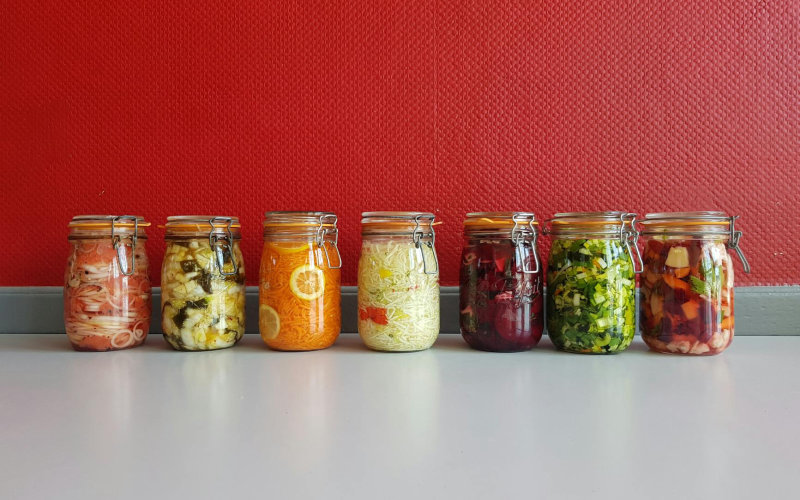


I killed my first two batches. Spectacularly. The first jar went slimy somewhere around day four, and the second smelled like something had genuinely died in it—which, I guess, something had. That was 2011. I’d just stumbled onto Sandor Katz’s Wild Fermentation after a friend wouldn’t stop raving about his homemade sauerkraut. Hooked on the idea, completely clueless about the mechanics.
Here’s what nobody tells you when you’re starting out: fermentation isn’t fragile. It’s actually one of the most forgiving preservation methods humans have relied on for roughly 10,000 years. You just need to nail a few non-negotiable rules, and then the whole process basically runs itself.
So let’s get into it. No fluff.
Why Salt Is the Whole Game
Salt isn’t flavoring here. It’s your safety system.
Pack vegetables with enough salt and you create an environment where harmful bacteria can’t survive—but Lactobacillus bacteria, the good guys, absolutely thrive. They pump out lactic acid, which tanks the pH of your brine and makes the entire jar inhospitable to nasties like Listeria or E. coli.
Most experienced fermenters land on 2% salt by weight as their standard. That means 20 grams of salt for every 1,000 grams of vegetables. Not a suggestion—that’s the number that keeps your ferments both safe and genuinely tasty. Too little salt and you’re courting spoilage. Too much and you’ll get a salty, sluggish mess that never really gets going.
One more thing: use non-iodized salt. Iodized table salt can actually suppress fermentation because iodine kills bacteria, including the helpful ones you’re counting on.
The Equipment You Actually Need
Not much. Seriously.
A wide-mouth mason jar (quart-size is perfect for your first attempts), a kitchen scale, and your hands. That’s it. You can spend real money on airlocks and ceramic crocks—and eventually you might want to—but I fermented happily in plain mason jars with loosely screwed lids for years.
But if you’re going to buy one thing early, make it a kitchen scale. Volume measurements for salt are wildly inconsistent depending on how coarse your salt is. Weighing it takes 30 seconds and wipes out an entire category of beginner mistakes.
Choosing Your First Vegetable
Start with cabbage. Every single time.
Cabbage is forgiving, cheap, and carries enough natural Lactobacillus on its surface to kick off fermentation without any outside help. Sauerkraut has been made for centuries across Germany, Korea (as kimchi’s simpler cousin), and Eastern Europe precisely because it just works.
Cucumbers are tempting but trickier—they go soft fast if your brine ratio is even slightly off. Carrots, radishes, cauliflower? All great. Save those for your second or third project, once you’ve got one successful batch behind you.
Keeping Vegetables Submerged Below the Brine
This is where most beginners trip up. Including past-me.
Any vegetable sitting above the brine line and exposed to air can grow mold. It doesn’t automatically mean the whole batch is ruined—you can often scrape surface mold off and the vegetable underneath is perfectly fine—but it’s entirely avoidable. Stuff a small zip-lock bag filled with brine on top as a weight, or press a folded cabbage leaf down over everything. Zero air contact with your vegetables is the goal.
Check your jar daily for the first three days. Press anything that’s floated back down.
Reading the Timeline Right
Room temperature matters more than most beginners expect. At 65°F (18°C), a basic sauerkraut takes roughly 4-6 weeks to fully develop. Bump that up to 75°F (24°C) and you might hit the same flavor in 10-14 days.
Start tasting around day 5. Your palate is the real instrument here. Tangy and bright? It’s working. Flat? Give it more time. And don’t panic over cloudy brine—that white haziness is just Lactobacillus doing its job.
What Mold Actually Means (And Doesn’t Mean)
White powdery surface mold. Pink or fuzzy mold. Black mold. These are three very different situations.
White Kahm yeast—that thin, pale film you sometimes see—is harmless, though it can nudge the flavor in odd directions. Skim it off and move on. Pink or fuzzy colored mold is your signal to toss the batch and start fresh, no guilt required. Black mold? Hard no. Discard everything, then sanitize your jar with boiling water before you use it again.
And don’t let one bad jar put you off. Even now, in 2023, I still occasionally get a batch that won’t behave.
Storing and Eating Your Ferments
Once it tastes right to you, cap the jar tightly and move it to the fridge. Cold slows the bacteria way down—essentially hitting pause on the whole process. Most lacto-fermented vegetables keep well for 6-12 months in the fridge, though you’ll probably eat them long before that’s a concern.
Don’t heat your ferments if you care about the probiotic benefit. The bacteria die somewhere above 115°F (46°C). Cold on a salad, eaten straight from the jar, stirred into yogurt—all perfect. Cooked into soup? You’ll still get the flavor. Just not the live cultures.
Bottom Line
Here’s something I genuinely haven’t seen written anywhere else: the biggest mistake beginners make isn’t technical—it’s psychological. They treat fermentation like baking, where half a gram off means disaster. It’s not like that at all. Fermentation is closer to gardening. You set up the right conditions, you stay observant, and you let the biology do most of the work. The moment you stop white-knuckling every detail and start just watching curiously, your success rate jumps. Trust your nose and your eyes more than any timer.
Frequently Asked Questions
How do I know if my fermented vegetables have gone bad?
Trust your senses. If it smells genuinely putrid—not sour-tangy, but rotten—toss it. Sliminess throughout the jar (not just slightly viscous brine) is another red flag. Pink or black mold means discard, full stop. When in doubt, throw it out. A failed jar costs maybe $2 in vegetables.
Can I ferment without a special starter culture?
Yes, absolutely. Vegetables carry naturally occurring Lactobacillus on their surfaces—especially organic ones. Salt, water, and time are genuinely all you need. Commercial starter cultures exist, but they’re not necessary for basic vegetable ferments. They’re more useful for dairy fermentation, like yogurt or kefir.
Is it safe to ferment vegetables at home without any training?
It genuinely is, provided you stick to your 2% salt ratio by weight, keep vegetables submerged in brine, and use clean equipment. Lacto-fermentation has one of the strongest natural safety records of any food preservation method we’ve got. A 2019 review in Comprehensive Reviews in Food Science and Food Safety confirmed that properly salted lacto-ferments essentially self-protect against common foodborne pathogens.
How long should my first batch ferment before I eat it?
Taste it at day 5, but expect most beginner batches to really hit their stride somewhere between day 7 and day 21 at typical room temperatures (68-72°F). There’s no single right answer—your own preference for tang and sourness is what determines “done.” Start tasting early, taste often, and you’ll know exactly what you like within your first two batches.
Photo by Beatrice B on Pexels