
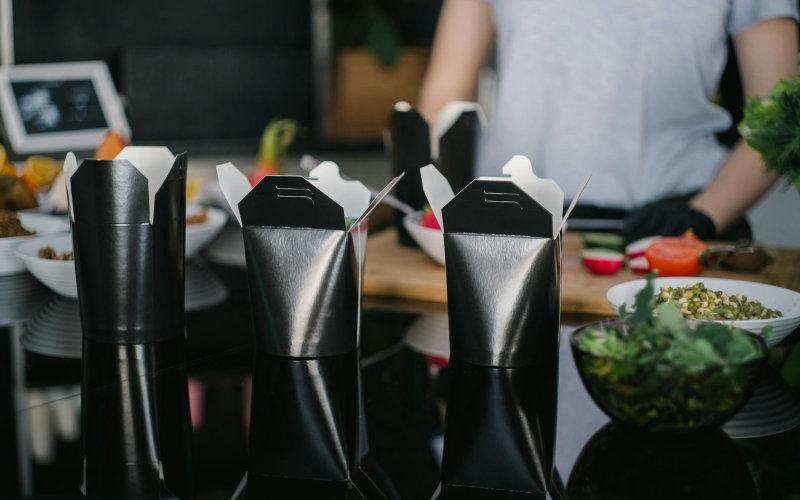


Last Tuesday I ordered pad thai from a decent Thai place two miles from my house. Thirty-two dollars. With tip and delivery fee. For one person.
I sat there eating it, thinking about the whole bag of rice noodles I’d bought two weeks earlier for $2.49. The math got ugly fast, and I couldn’t shake it. So I actually ran the numbers—sat down with receipts, grocery bills, the whole thing—and honestly? What I found surprised me more than I expected.
This isn’t one of those “cooking at home is always cheaper, go make soup” pieces. It’s messier than that, and I think you deserve the actual honest version.
The Real Cost of Restaurant Delivery in 2024
Here’s what most delivery app users quietly avoid thinking about: you’re not just paying for food. There’s a menu markup (DoorDash and Uber Eats restaurants typically inflate prices 15-30% compared to dine-in), a delivery fee, a service fee, and then you’re expected to tip on top of that already-bloated total.
I tracked my own orders for 90 days in early 2024. My average single-meal delivery order came out to $28.40. One entree, sometimes a drink. The base menu price was usually $14-16. So I was routinely paying close to double.
For a family of four ordering pizza, burgers, or Chinese on a Friday night? You’re looking at $60-90, easy. And for a lot of households, that’s not some special occasion—that’s just a regular Tuesday.
What Homemade Takeout Actually Costs
Okay, so I have to be fair about both sides here.
Making takeout-style meals at home isn’t free. Good sesame oil costs money. Fish sauce. Decent soy sauce. Your pantry staples add up across the first few months as you build them out. But—and this is the critical part—most of those ingredients stretch across 15-20 meals, not just one.
I made homemade orange chicken last month for my family of three. Total ingredient cost: $11.80. Chicken thighs, cornstarch, orange marmalade, soy sauce, garlic, rice. The same order from Panda Express (which isn’t even a sit-down restaurant) would’ve run me around $34 with fees and tip through delivery.
That’s a $22 gap on a single meal. Do that twice a week and you’re looking at $2,288 saved over a year. On two swapped meals a week.
Time: The Argument Delivery Usually Wins
Let’s be real—this is where restaurant delivery has a genuine edge. You cannot out-convenient a few taps on your phone.
But the “delivery saves time” argument gets shaky when you actually clock it. I started doing this. Average delivery time in my area (suburban mid-sized city) runs 35-55 minutes, sometimes longer on weekends. That’s not instant. That’s practically enough time to cook a decent stir-fry.
Homemade takeout meals—specifically the quick ones like 20-minute fried rice, sheet pan fajitas, or copycat lo mein—can realistically get done in 25-35 minutes if you’re even a halfway competent cook. So the time gap is narrower than most people assume. Where delivery genuinely wins is when you’re completely wiped out and the idea of chopping a single onion sounds like a punishment. That’s a real human state. I’ve been there plenty.
The Hidden Time Cost Nobody Talks About
Here’s something I’ve never actually seen written about: delivery has its own time tax.
You still have to browse the app (10 minutes, minimum). You wait. You track the driver. Sometimes the order’s wrong and you’re arguing with support chat. Sometimes you wait 65 minutes instead of 35. Then you’re eating lukewarm food out of a sad styrofoam container.
Homemade cooking, once you get comfortable with a handful of reliable recipes, becomes almost autopilot. My go-to garlic noodles—inspired by the famous $10 dish at The Slanted Door in San Francisco before it closed—take me 22 minutes now, half-conscious. The cognitive load of “cooking” drops dramatically once you stop treating it like an event and start treating it like brushing your teeth.
When Delivery Is Actually Worth It
I’m not going to tell you to never order delivery. That’d be absurd and also completely hypocritical coming from me.
There are specific situations where delivery wins outright. When you’re sick. When you’ve worked a 12-hour day and have nothing left in the tank. When you want something you genuinely cannot replicate—good sushi, a proper bánh mì, Ethiopian injera with complex berbere stews. Those are real cases where you’re buying something beyond just calories.
And honestly, if you make $80+ an hour and you’re doing billable work during that 35-minute delivery wait, the math flips entirely. Some people’s time really is worth more than the savings.
But most of us aren’t in that situation on most nights. Most nights it’s just convenience cosplaying as necessity.
How to Make Homemade Takeout Actually Fast
The gap between “I want pad thai at 7pm” and “I can realistically make pad thai” closes faster than you’d think with a little setup.
Keep five things stocked permanently: rice noodles or egg noodles, soy sauce, sesame oil, garlic, and eggs. With those five things you can throw together three or four convincing takeout-style dishes from whatever protein and vegetables you’ve got kicking around. No special store run required.
Batch your sauces on Sunday. A jar of stir-fry sauce—soy, oyster sauce, sesame oil, cornstarch, a little sugar—takes six minutes to make and lasts the whole week. Suddenly weeknight cooking gets roughly 40% faster because that chokepoint is already handled.
And get a carbon steel wok. One-time purchase, around $40 for a decent one from Lodge or a Chinese manufacturer. It genuinely changes how fast your stir-fry comes together. High heat, fast food.
Bottom Line
Here’s what nobody actually says out loud: the real reason delivery wins in most households isn’t time, and it isn’t really convenience either. It’s decision fatigue. By 6:30pm you’ve made hundreds of small decisions all day, and “what do I cook and how” feels like one more thing your brain refuses to process. The apps just hand you a scrollable list of answers and that feels like relief.
The fix isn’t about becoming a better cook. It’s about removing that decision point before it happens—by planning three or four specific meals on Sunday so you already know what Tuesday dinner is before Tuesday rolls around. When the decision’s already made, cooking at home is almost always faster than delivery and almost always a third of the price.
That’s really the whole move. Pre-decide. After that, the homemade takeout vs restaurant delivery cost comparison basically answers itself.
Frequently Asked Questions
How much can a family of four realistically save by cooking takeout-style meals at home?
A family of four replacing two delivery orders per week with homemade versions can realistically save $150-250 per month—that’s $1,800 to $3,000 annually—based on average delivery costs in U.S. cities in 2024.
Are there takeout-style meals that are genuinely quick enough to compete with delivery time?
Yes. Fried rice, stir-fry noodles, tacos, and quesadillas can all be done in under 25 minutes once you know the recipe. The first few times take longer, but the learning curve is genuinely short.
Does the cost comparison change if you include wasted groceries?
It does, and it’s a fair point. If you buy ingredients and never use them, your effective per-meal cost climbs. The fix is cooking ingredient-flexible meals—dishes where almost any protein or vegetable works—so waste drops dramatically.
What’s the single best homemade swap for delivery meals?
Fried rice. It uses leftover rice (actually better than fresh), takes 15 minutes, costs under $3 per serving, and honestly beats delivery fried rice most of the time because you control the heat and the ingredients.
Photo by Mikhail Nilov on Pexels