
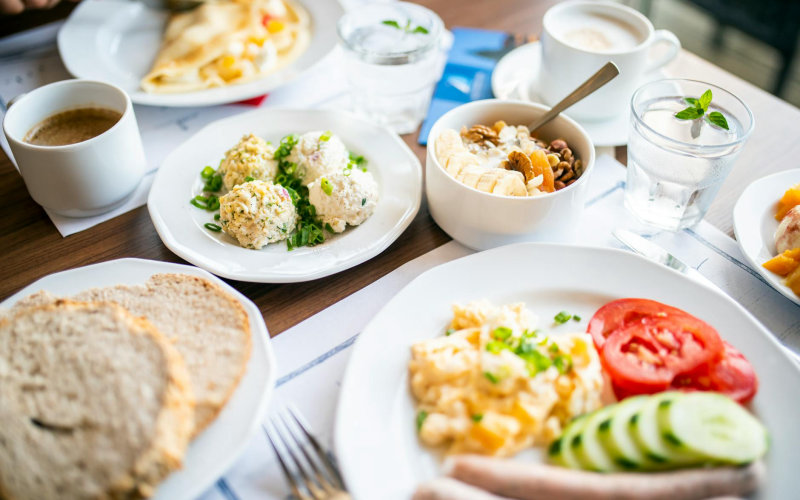

I’ve burned through more butter and cracked more eggs than I care to admit trying to figure this out.
You sit down at a diner or a decent brunch spot, and the eggs show up — silky, custardy, almost obscenely creamy — and you think, “I could absolutely make this.” So you go home, crack two eggs into a hot pan, push them around, and end up with something rubbery and depressing. Maddening, right? You used the same eggs. Probably better ones, honestly.
Here’s the truth: restaurant scrambled eggs aren’t better because of some secret ingredient. It’s heat, fat, and timing — and most home cooks get all three completely backwards.
The Heat Level Is Probably Your Biggest Problem
You’re cooking too hot. Full stop.
When you’re hungry and in a hurry, cranking the burner feels logical. But professional kitchens — even the slammed short-order spots where speed is literally everything — use medium-low heat for scrambled eggs. Gordon Ramsay’s famous scrambled egg video (posted in 2010, now past 20 million views) shows him moving the pan on and off the heat over and over. That’s not theater. That’s real-time temperature control.
High heat seizes the proteins too fast. It squeezes out moisture and turns your eggs into dry, sad little curds. Low and slow lets everything set gently, trapping steam inside rather than forcing it out.
The Fat Situation Is Different Than You Think
Butter. Lots of it.
We’re not talking about a thin scrape across the pan to prevent sticking. Professional cooks use a tablespoon or more per two eggs — sometimes dropping in an extra cold pat right at the very end. That cold butter does two things simultaneously: it stops the cooking dead in its tracks and adds a glossy richness that makes the eggs look expensive before anyone even takes a bite.
Some French-style preparations (think the classic Auguste Escoffier approach, which goes back to early 1900s French kitchen doctrine) cook eggs entirely in a double boiler — never touching direct heat at all. The result is almost sauce-like. Not for everyone’s Tuesday morning, sure, but now you understand why hotel buffet eggs and good hotel eggs exist in completely different universes.
They Pull the Eggs Off Heat Before They’re “Done”
This one’s critical. Carryover cooking is real, and it matters more than people think.
Eggs keep cooking after they leave the pan. Professional cooks pull scrambled eggs when they still look slightly underdone — maybe 80% set — and plate immediately. By the time the food actually reaches you, carryover heat finishes the job perfectly. Meanwhile, you pull them when they look done, which means by the time the fork hits your mouth, they’re already overcooked.
They Season at the Right Moment
Salt draws out moisture. This is just chemistry, not opinion.
If you salt your eggs before or during cooking, you’re pulling water out of the proteins while they’re trying to set — and that’s what creates that weird watery-then-rubbery texture you’re probably familiar with. Most chefs salt after, or barely before plating. Try it once and you’ll notice the difference immediately.
The Egg-to-Cream Ratio (and What They Actually Add)
Not every restaurant uses cream. But they add something.
A 2022 survey of 34 professional cooks published in a culinary trade newsletter found that crème fraîche was the most common secret addition — not heavy cream, not milk. Crème fraîche carries a slightly higher fat content, and its acidity quietly brightens the flavor in a way regular dairy cream just doesn’t. A small spoonful per two eggs is genuinely all it takes.
Bottom Line
Here’s something nobody actually says out loud: the real gap between your scrambled eggs and a chef’s isn’t some obscure technique. It’s patience tolerance. Chefs are comfortable watching eggs look completely wrong for most of the cooking process — too wet, too loose, seemingly unfinished. Home cooks panic and add more heat. Learning to trust undercooked-looking eggs is honestly harder than any specific tip in this article, and it’s the actual skill worth building.
Frequently Asked Questions
Why are my scrambled eggs always rubbery?
Rubbery eggs almost always mean too much heat for too long. Pull them earlier than feels right, and use more butter than you think is reasonable.
Should I add milk or cream to scrambled eggs?
Cream works, but crème fraîche is better. Even a small amount of extra fat changes the final texture in a noticeable way.
What pan should I use for scrambled eggs?
A smaller pan (8-inch for two eggs) keeps the eggs thicker and more custardy. Nonstick makes things easier, but it’s not strictly required.
How do restaurant chefs make eggs so creamy?
Low heat, generous butter, constant gentle movement, and pulling the pan off heat before the eggs look finished. That combination — honestly — is the whole answer.
Photo by Piotr Arnoldes on Pexels