
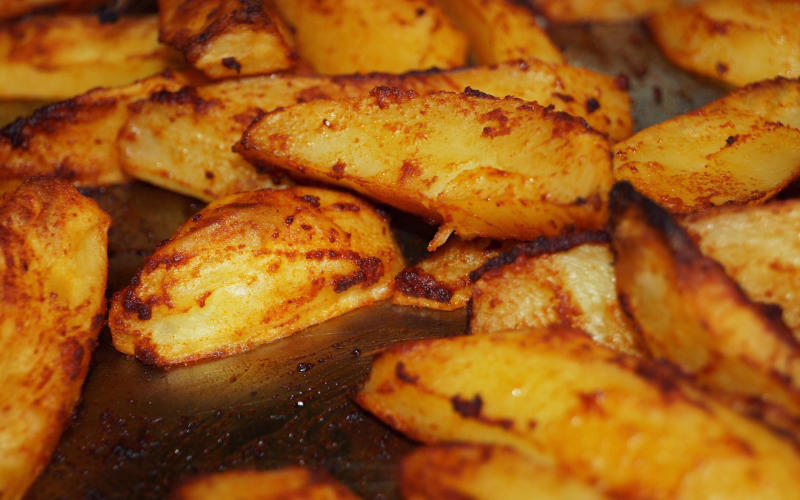


I’ve burned, steamed, and thoroughly wrecked more pans of vegetables than I care to count. For years I blamed my oven. Then the vegetables themselves. At one point I genuinely wondered if the universe was punishing me for hating raw celery. Turns out I was just doing one thing wrong—and honestly, it’s mortifyingly simple.
Most people assume roasting vegetables is foolproof. Toss them in oil, throw them on a pan, crank the oven to 400°F, walk away. But here’s the thing: if your vegetables shed moisture faster than the oven can burn it off, you’re not roasting anything. You’re steaming. And steamed vegetables are fine, sure—but they’ll never give you those caramelized, almost crunchy edges that make you want to demolish an entire sheet pan of cauliflower.
The fix? Space. Dry heat. And a scorching-hot pan that’s been preheating before a single vegetable touches it.
Dry Your Vegetables Like You Mean It
This sounds almost embarrassingly basic. But moisture is your enemy.
After washing, pat everything completely dry—paper towel, clean kitchen cloth, whatever you’ve got. Not a lazy swipe. Actually dry them. Broccoli florets are the worst offenders because water hides in all those tiny crevices, and that trapped moisture converts straight to steam the moment it hits the oven. A 2022 piece in Serious Eats confirmed what I’d already learned through sheer, repeated failure: surface moisture is the single biggest reason home cooks end up with soft, defeated vegetables.
Preheat Your Sheet Pan
This is the step most recipes don’t even mention. And it’s arguably the one that matters most.
Slide your empty sheet pan into the oven while it preheats to 425°F. Let it get genuinely, aggressively hot. Then pull it out, add your oiled vegetables fast, and spread them across that blazing surface. The contact with a screaming-hot pan kickstarts the Maillard reaction immediately—same browning process you’d get from a cast iron—before any moisture has a chance to pool underneath your food.
I started doing this around 2019 after watching a Jacques Pépin clip where he mentioned, almost in passing, that a cold pan is just a steaming pan. One sentence. It completely rewired how I cook.
Don’t Crowd the Pan (Seriously)
Every piece needs its own breathing room. No touching, no overlapping, no exceptions.
When vegetables are stacked or crammed together, their steam goes nowhere. It just hangs between them and softens everything. My rule: if you can’t fit everything in a single layer with roughly half an inch between pieces, grab a second pan. Two pans, two racks—still crispy. One overcrowded pan—nothing good happens, I promise you.
Use the Right Amount of Oil
Too little and things scorch. Too much and your vegetables end up basically frying in pooled oil, which (counterintuitively) actually works against crisping.
For a standard 12×18 sheet pan, I use about 2 to 3 tablespoons—just enough for a light, even coat. Toss everything in a bowl first so every surface gets covered before it ever meets the pan.
Salt at the Right Moment
Salt pulls moisture out of vegetables. So if you season them 20 minutes before roasting, you’re essentially pre-releasing water you’d then have to dry off anyway. Salt right before they go in. Or better yet, salt halfway through cooking, once that initial surface moisture has already cooked off.
Which Vegetables Work Best
Root vegetables—carrots, parsnips, sweet potatoes—are the most forgiving and a solid place to start. Brussels sprouts halved cut-side down are genuinely great with this method. Broccoli gets those dark, almost brittle edges that everyone fights over at the table. Zucchini and eggplant are trickier (high water content will haunt you), but the hot pan still helps dramatically compared to doing nothing.
Bottom Line
Here’s something I haven’t heard anyone say outright: your pan temperature matters more than your oven temperature. Everyone obsesses over 400°F versus 425°F, but two identical pans at the exact same oven temp—one preheated, one cold—produce completely different results. The preheated pan wins. Every single time. So stop fiddling with the temperature dial and start thinking about when you put the pan in.
Frequently Asked Questions
Does this technique work with frozen vegetables?
It can, but you have to compensate. Frozen vegetables dump a ton of water as they thaw in the oven, so spread them out even more than usual and add roughly 10 extra minutes to your cook time. Fresh will always outperform frozen here—but it’s not hopeless.
What’s the best oven rack position for crispy vegetables?
Middle rack is fine for most things. But shifting your pan to the lower third puts it closer to the heat source and gets you better browning on the bottom. I almost always go lower-middle when I want serious crispiness.
Can I use parchment paper or foil on the preheated pan?
Foil is fine—doesn’t hurt your results much. Parchment is a different story. It insulates slightly and slows down that initial sear. If maximum crispiness is the goal, skip it entirely and roast straight on the metal. Yes, cleanup gets harder. Still worth it.
How do I know when my vegetables are actually done?
Don’t trust the clock alone. Look for deep golden-brown edges and a bit of shrinkage. If they look basically the same color as when they went in, they need more time. What you’re seeing at that caramelized stage—that’s exactly what you’re about to taste.
Photo by Pixabay on Pexels