
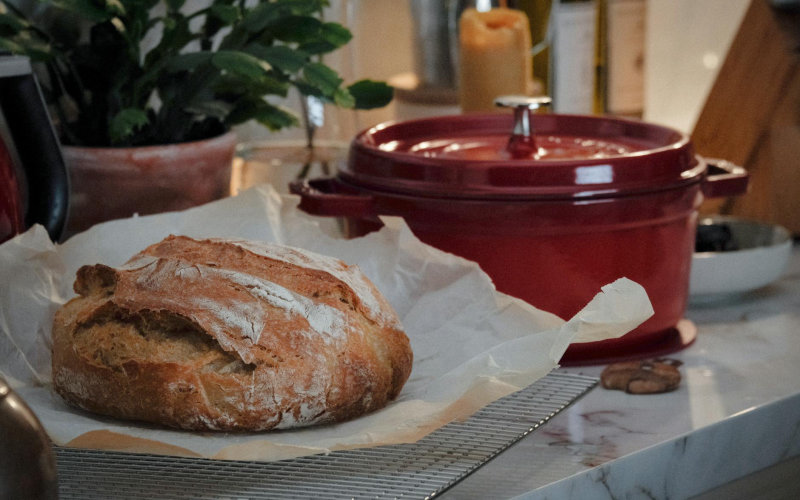


Okay, so here’s what nobody tells you when you fall down the sourdough rabbit hole: most beginner guides set you up to FAIL on purpose — not intentionally, but because they skip the hard truths in favor of making it sound easy. And look, I get it. “3-Ingredient Weekend Project!” sounds way more appealing than “a 30-hour craft that will humble you before it rewards you.” But I’d rather be honest with you upfront, because I actually want you to succeed.
Here’s the good news. Sourdough IS learnable. Once you understand WHY each step exists — not just what to do — your odds of pulling off a gorgeous, crackly-crusted loaf go way up. Searches for sourdough bread gut health rose 99% in 2025-2026 according to Puratos Taste Tomorrow research, and Puratos forecasted 33% more sourdough product launches in 2026 alone. You are not late to this. You’re right on time.
So let’s get into it — no fluff, no vague advice, just the actual step-by-step process that works.
The Real Ingredient List (Honest Version)
Technically, sourdough is made with flour, water, and a starter. But I’m going to be straight with you: salt is NOT optional. Every serious baker uses it. Salt strengthens the gluten network, controls fermentation speed, and keeps your loaf from tasting like a wet sponge. So we’re really talking about 4 ingredients. The “3-ingredient” framing is a marketing thing, and you deserved to know that on day one.
For flour, grab King Arthur Bread Flour or Bob’s Red Mill Bread Flour. you want something with 11.7–12.7% protein content. All-purpose flour will work in a pinch, but bread flour gives you SIGNIFICANTLY better gluten development and a more open crumb. The difference on your first loaf? Real. Noticeable. Worth the extra $2.
Step 1: Wake Up Your Starter (This Is Non-Negotiable)
Your starter needs to be active, bubbly, and fed 4–12 hours before you use it. This is the single most important step, and it’s where most beginners fail. Dense, brick-like first loaves? Almost always a sluggish starter.
Don’t rely purely on the float test, dropping a bit of starter in water to see if it floats. Some perfectly healthy starters sink. Instead, look for a bubbly surface and a starter that’s roughly doubled in size since its last feeding. That’s your green light.
New starter taking 7+ days to get reliable? That’s completely normal. Don’t rush it.
Step 2: Mix Your Dough (The Measurements Matter)
Use a kitchen scale. I cannot stress this enough. Cup measurements for sourdough are a gamble. hydration ratios make or break your loaf, and you can’t eyeball that. Here’s the base recipe to work from:
| Ingredient | Amount | Notes |
|—|—|—|
| Bread flour | 500g | King Arthur or Bob’s Red Mill |
| Water | 350g | Room temp, filtered if possible |
| Active starter | 100g | Fed 4–12 hours prior |
| Salt | 10g | Fine sea salt works great |
Mix flour and water first, let it rest for 30–45 minutes (this is called autolyse, it jumpstarts gluten development without any work from you), then add your starter and salt. Combine until shaggy and unified. No kneading yet.
Step 3: Stretch and Fold.
Here’s Why It Works
So this is the part most guides just tell you to DO without explaining WHY, which leaves beginners confused when the dough feels sticky and weird. Here’s the thing: sourdough dough is high-hydration, which makes it feel almost uncomfortably wet. That’s correct. Do NOT add more flour. Adding excess flour is one of the most common ways beginners ruin a loaf.
Instead, stretch and fold. Every 30 minutes for the first 2 hours, grab one side of the dough, stretch it up as high as it’ll go without tearing, and fold it over itself. Rotate the bowl. Repeat 4 times per set. What you’re doing is building tension and gluten structure, the same thing kneading accomplishes, but gentler and better suited to wet dough. By set 3 or 4, you’ll feel the dough tighten. That’s your gluten waking up.
Step 4: Bulk Fermentation.
Temperature Is Everything
This is where kitchens go wrong and nobody talks about it loudly enough, so I’m putting it in bold: TEMPERATURE CONTROLS YOUR TIMELINE.
At 65°F, bulk fermentation can take 10–12 hours. At 78°F, you might be done in 4 hours. Most beginner recipes say “let it ferment 4–6 hours” and don’t mention that this assumes a specific kitchen temperature, usually around 72°F. If your kitchen runs cold and you cut fermentation short, your loaf will be dense and under-developed. If your kitchen runs warm and you go too long, you’ll end up with a soupy mess that can’t hold its shape.
Ideally, keep your dough between 67–73°F. A basic instant-read thermometer fixes this problem instantly.
Step 5: Shape and Cold Proof Overnight
Once bulk fermentation is done (the dough should look puffy, feel airy, and have grown 50–75%), gently tip it onto a lightly floured surface and shape it into a round. Don’t degas it. treat it like something you care about. Place it seam-side up in a floured banneton or a bowl lined with a floured towel, cover it, and stick it in the fridge overnight, 8 to 16 hours works perfectly.
Cold proofing does two things: it slows fermentation for more flavor development, and it firms up the loaf so scoring is actually possible.
Step 6: Bake in a Lidded Dutch Oven (Not Optional Either)
Preheat your oven to 500°F with your Dutch oven inside for at least 45 minutes. The Lodge Combo Cooker (5-quart, around $50–$70) is the most beginner-friendly affordable option. The Challenger Bread Pan is the gold standard at $200–$300, but it’s not a must on day one. What IS a must: bare cast iron, not enameled. Preheating an empty enameled Dutch oven at 500°F. like a Staub, causes chipping and damage. Lodge confirmed this. Check what you own before you preheat.
Score the cold loaf with a sharp lame or razor, drop it in, lid on, bake 20 minutes. Then remove the lid and bake another 20–25 minutes until deep golden brown. That lid traps steam and replicates a commercial bakery oven. It’s the reason your crust shatters when you tap it.
Step 7: Wait.
Seriously, Wait.
Do not slice into that loaf for at least one hour. Hot sourdough is still cooking internally. the crumb sets as it cools. Cut it too early and you’ll get a gummy, underdone interior, and you’ll think you failed when you didn’t. This is the hardest step. I know.
What Most Guides Get Wrong
Here’s my honest take: the “sourdough is easier than you think!” narrative that exploded in 2025-2026, amplified by everyone from TikTok gut-health influencers to Taylor Swift casually mentioning she thinks about sourdough 60% of the time (yes, really). is setting a LOT of beginners up for disappointment. This is a 24-to-48-hour process with real variables, and first loaves fail. That’s not a bug. That’s the craft teaching you.
But here’s what I’d tell a friend starting out today: get a scale, get a thermometer, use bread flour, and don’t rush the starter. Those four things will do more for your first loaf than any trick or technique. The rest you’ll learn by doing.
FAQ
Can I use all-purpose flour instead of bread flour?
You can, but expect a denser crumb and less oven spring. Bread flour’s higher protein content (11.7–12.7%) builds stronger gluten networks, which matters enormously for a high-hydration sourdough. If all-purpose is all you have, reduce water to around 325g and don’t judge sourdough by that first loaf.
How do I know when bulk fermentation is actually done?
Look for dough that’s grown 50–75%, feels light and airy rather than dense, and has bubbles visible on the surface and sides of the bowl. The poke test helps too: poke the dough gently; it should slowly spring back, not snap back immediately or stay dented.
My first loaf came out totally flat.
What happened?
Nine times out of ten: either an under-active starter or a temperature issue during bulk fermentation. Go back to Step 1, make sure your starter is genuinely peaking before use, and track your kitchen temp during the bulk ferment. Those two variables explain the vast majority of flat, dense beginner loaves.
Photo by Merve on Pexels